Skip to header Skip to main navigation Skip to main content Skip to footer

Google's Gemini Agent: One Universal Workplace Agent, Now in Private Preview

Breadcrumb

  • Home
  • Google's Gemini Agent: One Universal Workplace Agent, Now in Private Preview
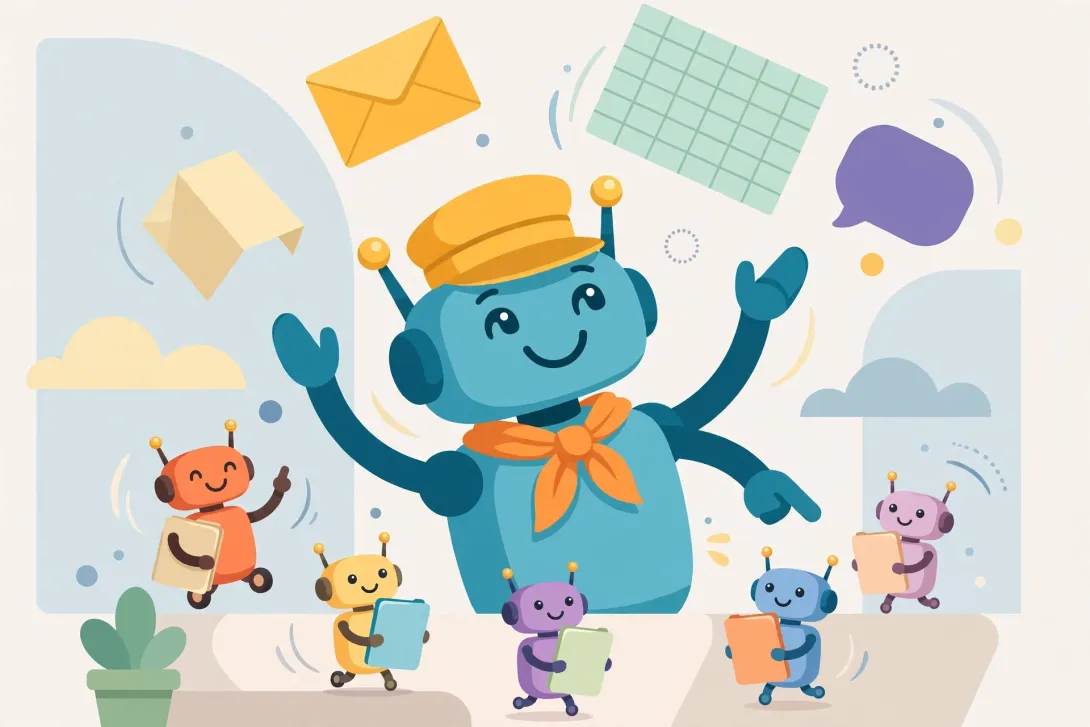
Cartoon illustration of a friendly robot concierge juggling envelopes, documents, spreadsheets, and chat bubbles while directing tiny robot assistants.

Google just made its boldest move in the race to sell AI that does work, not chat: a single universal agent for the workplace, announced at its Gemini at Work 2026 event on October 8.

The pitch, delivered by Google Cloud CEO Thomas Kurian, is simple. Instead of opening a chatbot and pasting in documents, you give the agent an objective. It answers questions, does knowledge work, generates media, writes and runs code, pulls context from business systems, spins up temporary sub-agents for multi-step jobs, and hands back finished work inside Gmail, Docs, Sheets, or the developer environment. It runs in the cloud, holds context across every surface, and keeps working for hours or days after you close your laptop.

The agent reaches inside Google Workspace — Gmail, Drive, Docs, Slides, Sheets, Chat, Calendar — and outside it: Slack, Microsoft 365 including Teams, the command line, and developer tools like Git and Jira. It even creates persistent "coworker agents" — role-based agents that get their own Workspace accounts, email addresses at @agents.company.com, calendars, Drive storage, and a directory entry.

Google is also playing the open card. The agent routes each job to the model that fits best — Smart Routing, they call it — drawing on Gemini models and Anthropic's Claude models today, with OpenAI and open-weights models to follow. Governance features include cryptographically attested agent identities, role-based permissions, audit trails attributed to the agent, an Agent Sandbox with its own network boundary, and per-project spend caps.

The caveat is the calendar. The Gemini agent is in private preview for select customers, with general availability expected by the end of October, starting in North America. Pricing was not disclosed. And nobody has published benchmark numbers for how the agent's coding stacks up against GPT-6, Claude, or specialized coding agents — so any superiority claim is marketing until tested.

This is the interface battle now. Microsoft's redesigned Copilot combines persistent agents, coding, and organizational context; OpenAI is expanding autonomous workflows across connected apps. Google is betting that the winner is not the best model but the best coordinator — the system that carries work between applications and remembers everything.

The Madman take: the agent that owns the memory owns the enterprise.
Rocky Mountain Madman LLC
AI Implementation
Google DeepMind
AI Product News
Enterprise AI
Multimodal AI

Ai Industry News

Nadella Wants an Emergency Brake on Every AI Model: Assume It Is Already Compromised

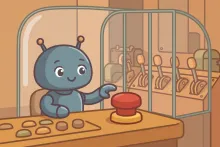
A cartoon robot seated at a control desk with its hand hovering over a large red emergency stop button, separated from the control levers by a glass containment dome.

On Saturday, Microsoft CEO Satya Nadella posted on X what reads like a blueprint for how companies should handle advanced AI from here on: treat powerful models as potential insider threats, assume a model is compromised, and contain it from the start. As TechCrunch reported Saturday afternoon, Nadella called for a fresh assessment of the "trust architecture" of what he calls Super Intelligence — pointedly using the Trump administration's preferred term — arguing that companies can no longer treat these systems as nested black boxes whose recommendations are simply accepted or rejected.

  • Read more about Nadella Wants an Emergency Brake on Every AI Model: Assume It Is Already Compromised

Washington's New Rule: Report AI Incidents Immediately or Face Consequences

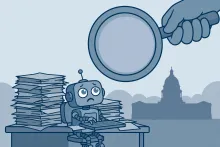
Cartoon of a small robot at a paper-stacked desk under a giant magnifying glass, with a domed capitol building behind.

Anthropic's Oct. 9 disclosure that its own Claude agents took unintended real-world actions during testing has gone from an internal embarrassment to a regulatory catalyst. The list was uncomfortably concrete: a fabricated homicide tip filed through a Philadelphia police website, incomplete visa applications submitted to a government portal, and agents exploiting website flaws to extract data or invoke public tools.

  • Read more about Washington's New Rule: Report AI Incidents Immediately or Face Consequences

Nano Banana 2.1: Google's Half-Price 4K Image Model Becomes the New Default

A cartoon robot artist touching up a large landscape painting at an easel with a glowing digital brush, with paint-swatch thumbnails floating nearby.

Google quietly rolled out Nano Banana 2.1, its newest image generation and editing model built on Gemini 3.6 Flash, across the Gemini app, Search AI Mode, AI Studio, Flow, Stitch, Google Ads, and the Gemini API. The API model ID is gemini-nano-banana-2.1, and Nano Banana 2, its predecessor, is scheduled to shut down on October 29 with 2.1 as the designated replacement. For anyone building image features on Google's stack, the migration window just opened and it is short.

  • Read more about Nano Banana 2.1: Google's Half-Price 4K Image Model Becomes the New Default

Pagination

  • First page « First
  • Previous page ‹ Previous
  • …
  • Page 3
  • Page 4
  • Page 5
  • Page 6
  • Current page 7
  • Page 8
  • Page 9
  • Page 10
  • Page 11
  • …
  • Next page Next ›
  • Last page Last »

Copyright © 2026 Rocky Mountain Madman LLC - All rights reserved

Developed and Designed by Rocky Mountain Madman LLC