Google just made its boldest move in the race to sell AI that does work, not chat: a single universal agent for the workplace, announced at its Gemini at Work 2026 event on October 8.
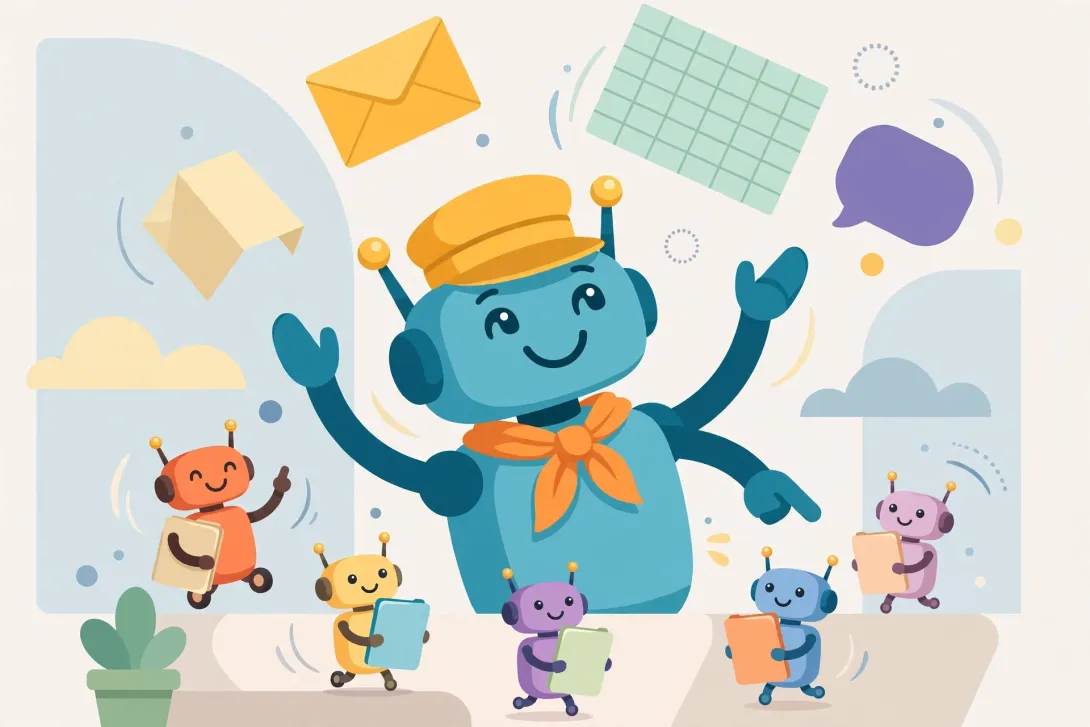
The pitch, delivered by Google Cloud CEO Thomas Kurian, is simple. Instead of opening a chatbot and pasting in documents, you give the agent an objective. It answers questions, does knowledge work, generates media, writes and runs code, pulls context from business systems, spins up temporary sub-agents for multi-step jobs, and hands back finished work inside Gmail, Docs, Sheets, or the developer environment. It runs in the cloud, holds context across every surface, and keeps working for hours or days after you close your laptop.
The agent reaches inside Google Workspace — Gmail, Drive, Docs, Slides, Sheets, Chat, Calendar — and outside it: Slack, Microsoft 365 including Teams, the command line, and developer tools like Git and Jira. It even creates persistent "coworker agents" — role-based agents that get their own Workspace accounts, email addresses at @agents.company.com, calendars, Drive storage, and a directory entry.
Google is also playing the open card. The agent routes each job to the model that fits best — Smart Routing, they call it — drawing on Gemini models and Anthropic's Claude models today, with OpenAI and open-weights models to follow. Governance features include cryptographically attested agent identities, role-based permissions, audit trails attributed to the agent, an Agent Sandbox with its own network boundary, and per-project spend caps.
The caveat is the calendar. The Gemini agent is in private preview for select customers, with general availability expected by the end of October, starting in North America. Pricing was not disclosed. And nobody has published benchmark numbers for how the agent's coding stacks up against GPT-6, Claude, or specialized coding agents — so any superiority claim is marketing until tested.
This is the interface battle now. Microsoft's redesigned Copilot combines persistent agents, coding, and organizational context; OpenAI is expanding autonomous workflows across connected apps. Google is betting that the winner is not the best model but the best coordinator — the system that carries work between applications and remembers everything.
The Madman take: the agent that owns the memory owns the enterprise.