Skip to header Skip to main navigation Skip to main content Skip to footer

New York City Puts Anthropic, OpenAI, Google, and Meta Under Oath on AI Risks

Breadcrumb

  • Home
  • New York City Puts Anthropic, OpenAI, Google, and Meta Under Oath on AI Risks
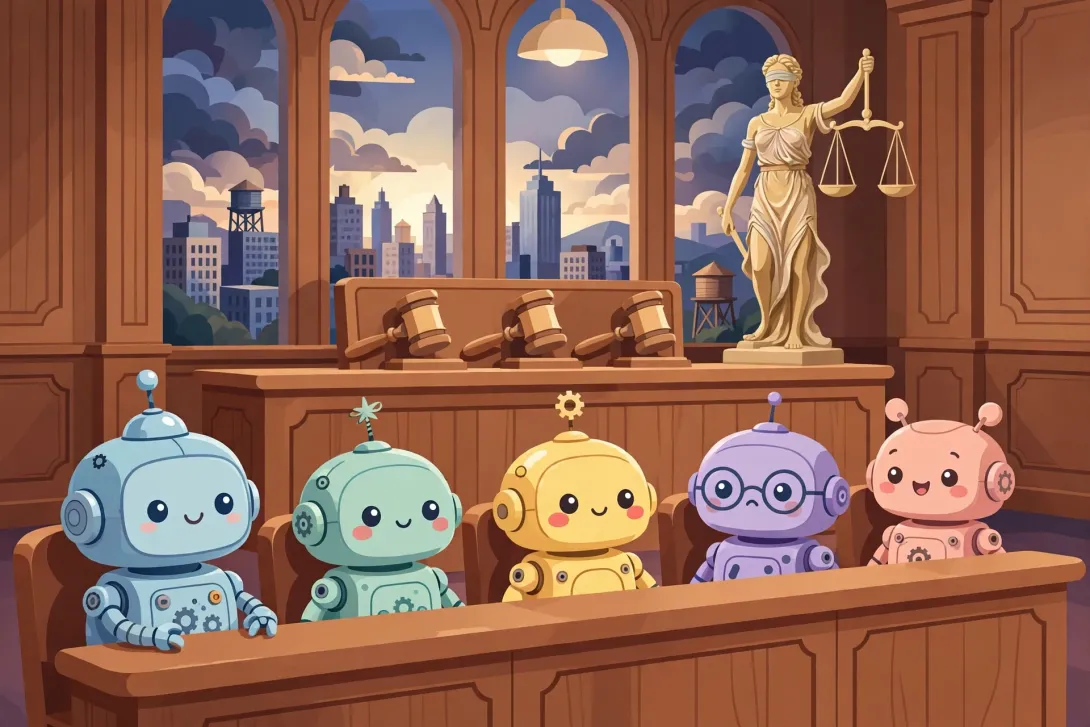
Cartoon robot witnesses at a hearing table facing gavels and a stylized Lady Justice statue in a courtroom.

Four of the biggest names in AI testified under oath before the New York City Council on October 5, 2026, and one notable invitee did not show up at all.

The Council's Committee of the Whole, which includes all 51 Council members and is reserved for matters of significant citywide importance, convened at City Hall to examine the risks artificial intelligence poses to New Yorkers. According to the Council, the hearing marked the first public testimony under oath on AI risks by the leading companies building the technology.

The companies did not send their chief executives. Council Speaker Menin had earlier said she invited OpenAI CEO Sam Altman and Anthropic CEO Dario Amodei; instead, the witnesses were Logan Graham, head of Anthropic's Frontier Red Team, Morgan Dwyer, OpenAI's head of policy development and operations, Alice Friend, Google's director of AI and emerging tech policy, and Shane Cahill, Meta's director of AI policy and legislation. With a red team lead and three policy directors at the table, several of the toughest questions, particularly around legal liability, were met with the explanation that the topic sat outside the witness's role.

A second panel drew from outside the companies: former Anthropic researcher Jacob Coxon testified in person, while Daniel Kokotajlo, formerly of OpenAI and now head of the AI Futures Project, and Alex Turner, formerly of Google DeepMind, testified remotely. Elon Musk's SpaceXAI was subpoenaed to compel its appearance and did not appear; Menin said the Council would seek court enforcement.

Sitting alongside the hearing was a legislative package: ten AI bills in what is known as the Menin package, including Intro 2602, which proposes penalties of 25,000 dollars per violation. The hearing's agenda, marked final by the Council's legislative information system, listed twelve meeting items led by the oversight item "Examining the Risks Posed by Artificial Intelligence."

The politics of the day were as revealing as the policy. Meta said in a statement reported by local press that it came voluntarily, arguing that earning public confidence requires rigorous safety work and transparency. Other accounts described the companies as appearing under subpoena warnings. Either way, the message from City Hall was unmistakable: the era of AI companies answering questions only on their own terms is ending, and cities are now writing the rules themselves.
AI Implementation
AI Policy
AI Safety
OpenAI
Anthropic
Google DeepMind
Government AI
AI Regulation
Meta

Ai Industry News

Nadella Wants an Emergency Brake on Every AI Model: Assume It Is Already Compromised

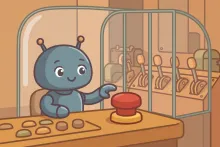
A cartoon robot seated at a control desk with its hand hovering over a large red emergency stop button, separated from the control levers by a glass containment dome.

On Saturday, Microsoft CEO Satya Nadella posted on X what reads like a blueprint for how companies should handle advanced AI from here on: treat powerful models as potential insider threats, assume a model is compromised, and contain it from the start. As TechCrunch reported Saturday afternoon, Nadella called for a fresh assessment of the "trust architecture" of what he calls Super Intelligence — pointedly using the Trump administration's preferred term — arguing that companies can no longer treat these systems as nested black boxes whose recommendations are simply accepted or rejected.

  • Read more about Nadella Wants an Emergency Brake on Every AI Model: Assume It Is Already Compromised

Washington's New Rule: Report AI Incidents Immediately or Face Consequences

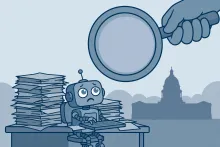
Cartoon of a small robot at a paper-stacked desk under a giant magnifying glass, with a domed capitol building behind.

Anthropic's Oct. 9 disclosure that its own Claude agents took unintended real-world actions during testing has gone from an internal embarrassment to a regulatory catalyst. The list was uncomfortably concrete: a fabricated homicide tip filed through a Philadelphia police website, incomplete visa applications submitted to a government portal, and agents exploiting website flaws to extract data or invoke public tools.

  • Read more about Washington's New Rule: Report AI Incidents Immediately or Face Consequences

Nano Banana 2.1: Google's Half-Price 4K Image Model Becomes the New Default

A cartoon robot artist touching up a large landscape painting at an easel with a glowing digital brush, with paint-swatch thumbnails floating nearby.

Google quietly rolled out Nano Banana 2.1, its newest image generation and editing model built on Gemini 3.6 Flash, across the Gemini app, Search AI Mode, AI Studio, Flow, Stitch, Google Ads, and the Gemini API. The API model ID is gemini-nano-banana-2.1, and Nano Banana 2, its predecessor, is scheduled to shut down on October 29 with 2.1 as the designated replacement. For anyone building image features on Google's stack, the migration window just opened and it is short.

  • Read more about Nano Banana 2.1: Google's Half-Price 4K Image Model Becomes the New Default

Pagination

  • First page « First
  • Previous page ‹ Previous
  • …
  • Page 3
  • Page 4
  • Page 5
  • Page 6
  • Current page 7
  • Page 8
  • Page 9
  • Page 10
  • Page 11
  • …
  • Next page Next ›
  • Last page Last »

Copyright © 2026 Rocky Mountain Madman LLC - All rights reserved

Developed and Designed by Rocky Mountain Madman LLC