If you bought a slice of Anthropic or OpenAI on the secondary market, you might want to sit down. The labs just told the market, in unison, that your shares may not exist.
Anthropic and OpenAI both updated their stock-transfer policies this week to declare any share transfer made without board approval "void" — not voidable, void. A void transfer never legally happened. The buyer is not recognized as a shareholder and has no rights. OpenAI's language was nearly identical: transfers without written consent "will not be recognized and carry no economic value to you."
Anthropic went further, publishing a blocklist naming Forge Global, Hiive, Open Door Partners, Unicorns Exchange, Pachamama Capital, Lionheart Ventures, Sydecar, and Upmarket. Any sale or transfer of Anthropic stock offered by these firms, the company said, is void and will not be recognized on its books.
The move targets the industry's favorite workaround: special purpose vehicles. Since direct transfers require company approval, SPVs — shells that hold private shares and pool outside money around them — became the standard way for outsiders to get exposure. Anthropic explicitly bans SPVs from acquiring its stock. PitchBook analyst Emily Zheng described the resulting structures as "multiple layers of SPVs that create multiple layers of management fees," nested shells where each layer charges its own fees and nobody can verify the underlying shares were legitimately acquired. Under the new policies, if the original transfer into any SPV lacked board approval, the entire chain is void.
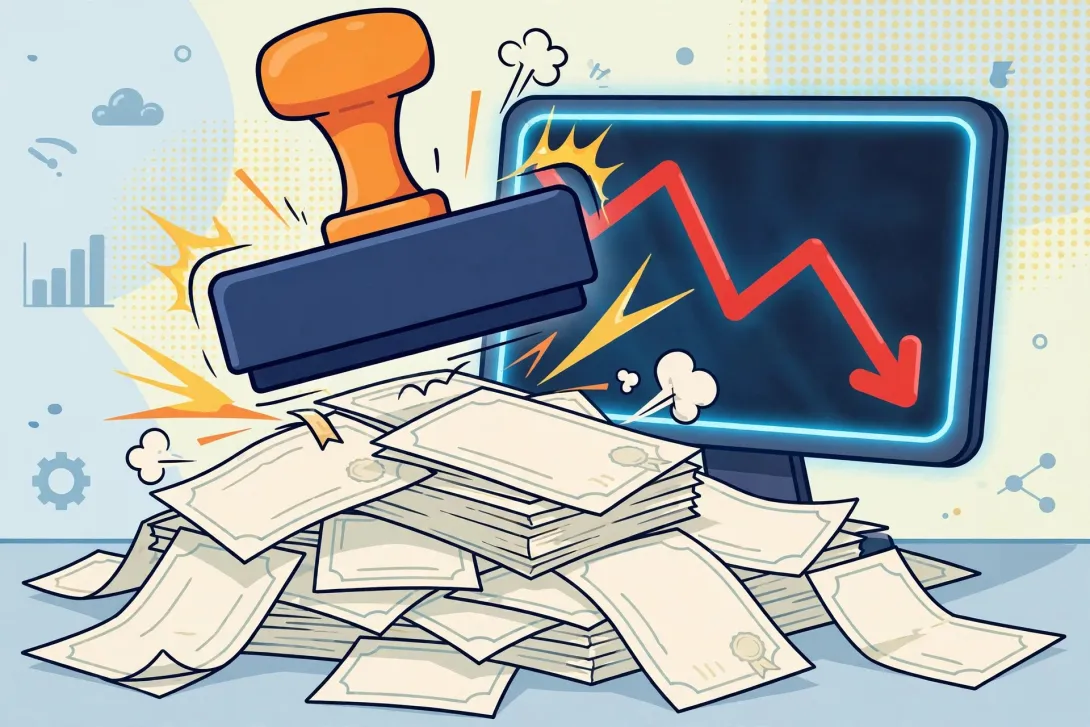
Tokenized markets reacted instantly. Tokenized versions of the shares fell roughly 36 percent in a day as traders realized the synthetic exposure had no legal floor.
This is not fundraising — it is housekeeping ahead of the main event. Both labs are rumored to be heading toward IPOs, and a clean cap table matters. The timing also follows months of wild secondary-market speculation, including tokenized "Anthropic" products priced at trillion-dollar valuations with no real shares behind them.
The lesson for investors is old but expensive: in private markets, the company is the counterparty. If it does not recognize you, you own a very pricey lesson.